In October this year Brazilians go to the polls to elect their president. There is a lot at stake as the country grapples with its recovery from the covid pandemic, as the incumbent Bolsonaro looking to seal a second term in office. However former president Lula da Silva has made a long awaited political comeback and is looking to get elected for a third time as head of state. I spoke to São Paulo based journalist Sam Cowie to get his thoughts on how events might unfold in this crucial election for South America’s biggest democracy. In this in-depth interview Sam shares his insights and expertise on the political set up in Brazil and how the candidates might fare in the elections.
Q. What do you see as being the main issues in this electoral campaign?
Several right? Basically the ongoing conflict between President Bolsonaro and other Brazilian institutions namely the supreme court, the supreme electoral court. You may have noticed that President Bolsonaro has a deep mistrust of Brazil’s electronic voting system. This goes against all evidence and expert opinion including that of the federal police, the head of the senate and the speaker of the lower house, who is technically a Bolsonaro ally. They publicly defended the electronic voting system this week, after Bolsonaro raised doubts about it again.
Broadly speaking it’s basically whether Mr Bolsonaro and his supporters, are going to accept the result of the election if it does not go their way. That leads a lot of people and analysts to worry whether there will be a kind of Brazilian version of Capitol Hill 2021, when Donald Trump supporters rushed Congress. Broadly speaking those are the main issues here.
Regarding the electoral campaign itself, OK, so you have got other issues; fake news, violence… The last election campaign was characterised by fake news attacks, some of them pretty ludicrous, one of the big fake news stories going around was the idea of this baby bottle that had a penis shaped teat, a mamadeira pirocathey call it here, these ridiculous things… And also the violence right, Bolsonaro was actually stabbed and was nearly killed. You did have quite a lot of violence directed at non Bolsonaro supporters; it was a pretty dirty and violent campaign, all round pretty much. How much dirtier and how much more violent it’s going to be, these are some of the main concerns floating around at the moment.
Then of course you’ve got the role of the military, are the men loyal to Bolsonaro, they going to accept the results of the election if he loses? What happens if they don’t?

(Photo by felipefrazao via Canva)
Q. Do you think the war in Ukraine will play a role in the election?
Yes, it already is. With the war in Ukraine, the world economy in general is completely volatile and crazy, you have the transport and logistics bottlenecks caused by covid and right off the back of that, basically before things even managed to recover, then you’ve got the war in Ukraine so between the sanctions in Russia and the bottlenecks caused by the war itself in terms of Ukraine getting its exports out, what’s happening to Brazil right now is you are seeing astronomical rises in fuel, in cooking gas – bottled cooking gas, botijão which is used by 90% of the population, the prices have gone up ridiculously. Fuel prices have gone up.
I had this conversation with an analyst last week, Mario Sergio Lima, he told me that basically Brazil is a country that relies so much on road transport, when the price of fuel goes up then the price of food goes up too, so you’ve got this secondary effect. Also Brazil is a big importer of wheat, it does produce some wheat but overall it imports more; wheat prices have risen sharply. So the effects that you’re going to see here because of the war in Ukraine, because of the price of commodities especially oil and food commodities, is higher inflation eating into the pockets of Brazilians. According to Datafolha (the most reliable polling system) most people blame the president, whether it’s really his fault or not, you could argue that he has not done enough, he has not introduced any public policies to try and keep prices down or provide alternatives. But that’s a different conversation right?
The point here is, at the end of the day, people feel inflation, they feel price rises and they blame that rightly or wrongly on the president. So that plays against Bolsonaro’s re-election chances.
Q. This year there are many high profile candidates, including the mayor of São Paulo, João Doria, and Ciro Gomes, a stalwart of presidential elections. Does this show that Brazilians have a good variety of choice at the ballot box?
Those two candidates don’t stand a chance of winning quite frankly, they would only stand a chance of winning if either Lula or Bolsonaro dropped out of the race. Every single year in Brazil you have multiple presidential candidates. It’s not like other democracies that English speaking readers might be more familiar with like the UK or the US where you only have two candidates because you basically only have two parties. Brazil is a multi-party democracy, too many parties quite frankly, there are something like thirty parties registered in congress, the majority of them don’t have any real clear ideology, a lot of them are practically just there for rent seeking and patronage.
In every single Brazilian election you always have at least six candidates, you might have two front runners… but this is perhaps a more decided election than ever, in certainly the last few elections. In 2014 there were three candidates who looked to have a chance, Dilma Rousseff who was the incumbent at the time for PT, Aécio Neves and Marina Silva the former environment minister. At some point Marina overtook Aécio in the polls; the point is that in 2014, those three at some point stood a chance or looked like they might win or at least make it to the second round. At the moment, you’ve got two candidates and the majority of people polled have already decided who they are going to vote for. So there’s no real chance that any of these other candidates, whether it’s Ciro Gomes or João Doria, both polling at under 10%, are going to win or even make it to the second round at this stage, not unless somebody else drops out of the race, which doesn’t seem likely at this stage.
Q. Despite this broad range of candidates, do you see any other eventuality other than Bolsonaro and Lula da Silva making it to the second round?
At this stage absolutely not. All of the other candidates are polling in single digits. There was this whole talk of a third way candidate but they’ve been talking about that for a long time now and it hasn’t gone anywhere.

(Photo by felipefrazao via Canva)
Q. Do you think there will be a peaceful transfer of power if Bolsonaro does not win the election? Or is it likely that the result will be disputed?
It’s really difficult to say. I mean a lot can change between now, and the election is still six months away basically, for the first round at least; a lot can change in that time. But the thing is, if Lula beats Bolsonaro by a wide margin then there’s less room for him to claim fraud. On some level he may just claim fraud anyway. It’s a really difficult question and quite frankly it’s the question on everyone’s lips at the moment, will there be a peaceful transfer of power, will there be some incident?
What we need to see in Brazil is how many people are prepared, if Bolsonaro refuses to accept the result of the election, to stand by him. How many people are going to back him? Are certain sections of the military going to back him? Are certain sections of congress going to back him? What are his supporters going to do? What are his allied politicians going to do? What are his supporters on the streets going to do? This is the real question here.
The situation is not 1964 when there was a military coup, that was backed by the United States, because it was cold war. If there was to be some kind of coup, how would that manifest itself, what shape would it take? Would it be Bolsonaro refusing to accept the elections? Would people go along with Bolsonaro if he refused to accept the elections or not? That is the question. I don’t think it’s very likely the idea of a military coup with tanks on the street, that kind of stuff doesn’t really happen these days. It’s more institutional based coups.
Q. Seemingly Bolsonaro’s base remains strong; is it likely he will have enough support to beat Lula da Silva who is ahead in the polls?
Probably not at this stage. Bolsonaro has gained ground in the polls recently mainly because of one of the other right wing candidates Sergio Moro, who was Bolsonaro’s justice minister, dropped out of the presidential race, so it seems a lot of his voters have transferred their vote to Bolsonaro, rather unsurprisingly some would say.
The reality is that Bolsonaro has a solid base but he also has very high rejection rates, and the state of the economy, which is a big driver, anywhere but especially in Brazil, which is a middle income country that is very wealthy in some parts but it also has very high rates of poverty. No, I would say at the moment at least, and most people agree, Lula is still the favourite. Bolsonaro does have a chance of winning, yes of course he does. But Lula is the heavy favourite.
Q. What kind of a role is fake news and misinformation likely to play in this campaign?
It’s a really interesting question, because last time it played a huge role. You have to question yourself, how much do people really believe fake news? Does it change people’s minds? Or does it just add more fuel to the fire? Or does it reinforce existing prejudices and opinions? Whether it’s fake news in Brazil, the US, Hungary, or wherever it is, whatever country is having a problem with fake news, this is the real issue. Nobody still really understands how much fake news does effect elections or not. It’s important to remember that.
Will fake news play a role in this election? It definitely will. Will it play as much as a role as last time? Will that role change? I imagine so, everything evolves, all of these electoral tactics, they all evolve, as you can’t just repeat the same tactics as last time, things have changed. Are people wiser to fake news now then they were before? That’s the big question here. Also if you look at the state of Brazil right now coming out of covid and then war in Ukraine, prices on everyday household items, through the roof, are people really going to be paying that much attention to fake news? Or are they going to be voting with their pockets? It’s another huge question.
It definitely played a substantial role in the last election. I’m not sure really how many people saw a fake news piece on WhatsApp of things like that Haddad would introduce sex education for children under five at school for example, all of this bizarre stuff. I don’t know how many people really believe that or whether it just reenforces existing prejudices. And that’s the big thing all over the world, people haven’t really worked out the effect of it yet. But people are wiser to it now.
What’s the main issue in this election right? The main issue in the last election you could argue was corruption, and what we call here the pauta de costumes, corruption, public security and this identity politics stuff. This election is different, this is an election that is going to be decided on the economy.
Q. Did the elections of Alberto Fernandez in Argentina and Gabriel Boric in Chile make it more likely that a left wing candidate will get elected in Brazil?
It’s hard to say. Most Brazilians don’t have any connection with Argentina and even less so with Chile. In terms of politics they look much more to the United States than they do to other Latin American countries, in general. But these things often come in waves, we saw that with the so called pink tide, when you had left leaning governments elected over Latin America, in South America especially in the early 2000’s period, up until the 2010’s.
The fact of the matter is, it’s not necessarily about those candidates being elected there, what it’s more about is a generalised dissatisfaction of voters in this region, this region that’s been hit really bad by covid, that’s feeling the effects of the Ukraine war, that has had sluggish economic growth beforehand, has extremely high levels of inequality; people are voting perhaps for left wing candidates more now because they see left wing candidates as doing more for them. I think it’s more a regional question of the economies of each country, I think that’s more the driving force as opposed to looking at candidates in other countries.
But you could probably say that Boric in Chile has been quite inspirational for certain sections of the Brazilian left and left wing voters. Boric has already endorsed Lula, Dilma went to his inauguration in Chile.
Q. History shows us that the incumbent has won re-elections in Brazil since Fernando Henrique Cardoso got elected in the 1990’s; will this play in Bolsonaro’s favour?
Yeah it definitely plays in his favour, because you have all the levers of power. It will be to his advantage, but for many reasons again a lot of this comes down to the economic shocks of covid and the Ukraine war, you can have all of the levers of power, all the TV time and all the fake news that you want, but if people are paying much more than they were paying the year before for basic foodstuffs, if people are paying more for gas prices and for fuel prices every single month, it makes those realities hard to deal with. You can’t ignore the reality and the reality is that people have less money and the economy continues to be weak. For the vast majority of the population the economy is not good. There are some people and some companies that have had some short term gains with the commodity price spike because of the Ukraine war, but for the vast majority that price spike has translated into higher fuel prices, higher cooking gas prices and as a result higher food prices.
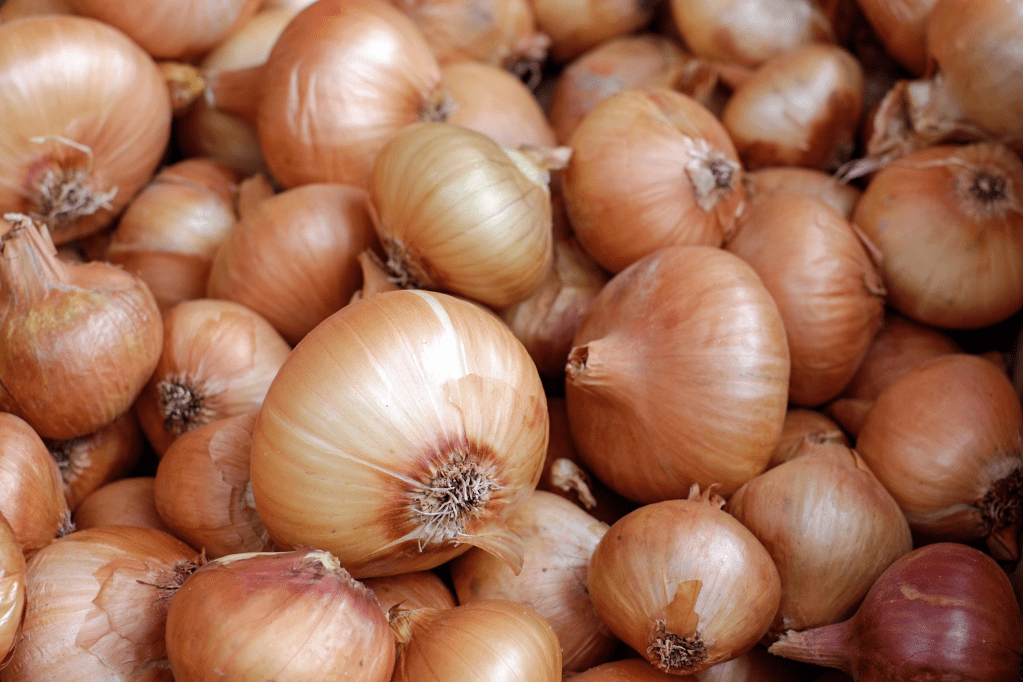
Bolsonaro faces a tough time getting re-elected because these are basic realities that you can’t just cover up. For example in the last election you could perhaps argue that the main issue for that election was about corruption and Bolsonaro as a candidate has always had a cloud of scandal whirling around him but because he was such an unimportant figure before, nobody really cared, it’s only post 2014/15 that he made inroads on the nation stage. Nobody expected him to get elected as president back in 2014 for example. Although the signs were there, anybody who plays close attention to politics, the signs were there; but still if we are talking about the last election and we say that the main issue was corruption and you’ve got a candidate like Bolsonaro who says things like “We’re going to end corruption” and “I’ve never been accused of corruption”, these are concepts, they are not real, you can’t touch them. It’s somebody saying something. When you go to the supermarket and onions are much more expensive than they were a few years ago that’s something real that affects people. So I think that’s the difference between the last election and this one.
( Photo by Couleur via Pixabay)
Q. What will be the main challenges and the most pressing issues for the elected president come October?
For who wins, it’s going to be the same problems right? High fuel prices, high food prices, high gas prices, high unemployment. A lot of stuff basically! Lingering issues with public security, the homicide rate has dropped relatively in the last few years. Whether that is down to covid or whatever it is, I’m not exactly sure, violence in Brazil is a complex situation. But at the end of the day the homicide rate has dropped in most regions, one of the regions it didn’t drop was in the northern region, the Amazon, where it increased. But elsewhere overall it dropped. But Brazil is still an extremely violent country. These public security issues probably won’t play on the elections as much as last time, but will always be present. Bolsonaro will probably try to leverage that to his advantage as well, he’ll accuse the PT and Lula and others of being soft on crime.
Another thing we need to see, how strong Bolsonaro is going to be in six months’ time. Is he going to be a weakened president because of the economy? If nobody can afford anything, if people are skipping meals, if people are using wood to cook with instead of gas… all of these things that are already happening now and seem like they will only get worse in six months, how strong is he going to be? If he’s completely weak then no one is going to back him in congress, his allies in the military will be less likely to back him. This is the real question here, how strong will Bolsonaro be in six months from now.
It also depends on who gets elected as well, if you’re going to have a bunch of congressmen that are faithful to Bolsonaro, they’re going to make it difficult for whoever gets into office. But at the same time Brazil is a pragmatic country. As soon as it is not in their interests any more people tend to switch sides pretty quickly in Brazilian politics.







 WilliamGAFrost